Food tour in Naples: the complete guide
A food tour in Naples typically lasts two and a half to three hours, starts at Piazza Bellini or Piazza Dante, and explores the historic centre on foot with eight or more tastings: pizza a portafoglio, pizza fritta, frittatina di pasta, taralli, mozzarella, babà, and gelato. What you’re paying for isn’t the food—cheap and everywhere in Naples—but the sequence, the timing, and the guide who knows exactly which counter to stop at.
I live in Rione Sanità and I walk through the historic centre almost every morning. The question I get asked most often isn’t where to eat well: in Naples, you eat well almost everywhere. The real question is another: if the food is already out on the street, what am I paying a guide for?
Because food is cheap and guides aren’t
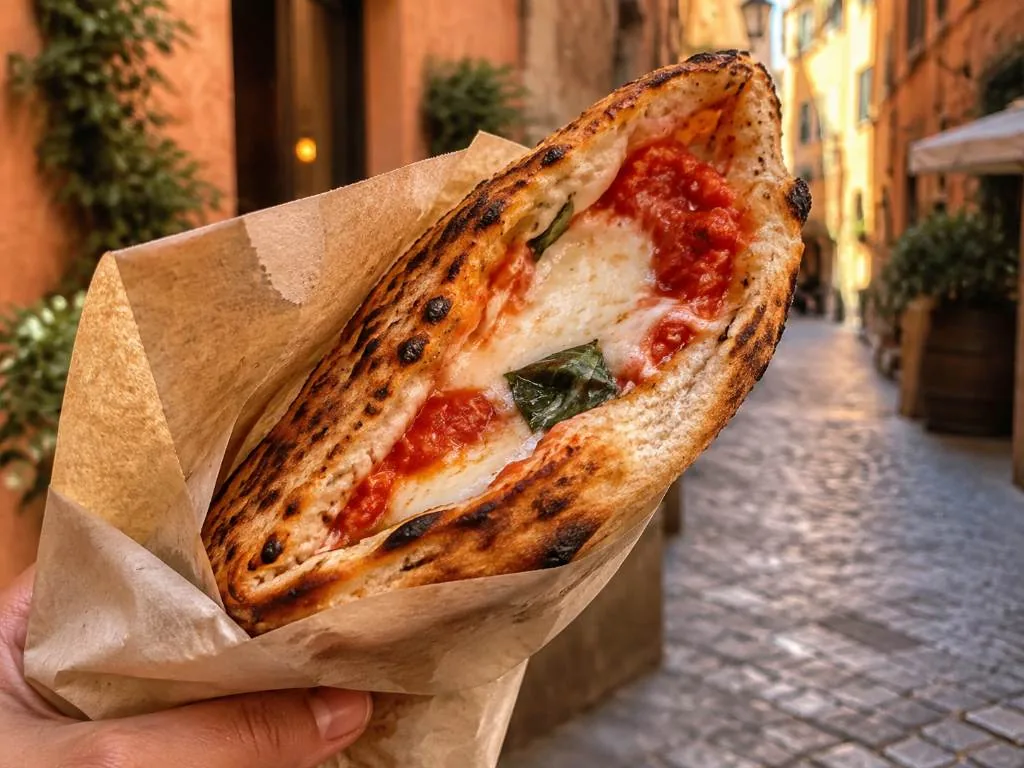
A pizza a portafoglio is a margherita folded into quarters and eaten on the go. A frittatina di pasta is bucatini, béchamel, peas and provola, breaded and fried. A tarallo ’nzogna e pepe with almonds is something you buy at the counter without even sitting down. These are popular treats, born to be affordable for everyone, and no one needs me to find them: just head into Via dei Tribunali and follow the smell of fried food.
What you’re buying when you book is order and timing. Eight tastings thrown together at random are eight snacks that will ruin your dinner. The same eight, spread over two and a half hours with savoury first, mozzarella in the middle and dessert at the last two stops, become a meal. There’s one more thing people realise too late: many historic friggitorie close on Sunday afternoons or Mondays. Tour schedules know this; your solo plans don’t.
The walking tour and the workshop aren’t the same thing
This is the mistake I see most often. A street food tour is a two-and-a-half-hour meal on the move: you’re on your feet, walking ten or fifteen minutes between stalls, eating in the street. A pizza-making course is a completely different day: three hours indoors, hat and apron, the family recipe for the dough, the technique of stretching the mozzarella, and at the end, your pizza in the wood-fired oven. In the course with aperitivo, the oven is electric and domestic, because the idea is that you’ll recreate it at home.
They’re not alternatives, and you don’t choose them by the same criteria. You take the walking tour if it’s your first time and you want to explore the historic centre while eating. You take the workshop if you feel like getting hands-on, if it’s been raining for three days, or if you’re travelling with kids who start complaining after an hour on their feet. If you only have one free evening, take the walking tour.
What the historic centre is like at 11 a.m. and what it’s like at 7 p.m.
At eleven in the morning, Via dei Tribunali is a working street. Shutters go up, counters fill up, coffee is drunk standing in two sips, and no one asks if you want it to go. The light slices between the buildings, it photographs well, and the alleys are easy to navigate. It’s the best time if you struggle with walking, if you’re too hot, or if crowds bother you.
At seven in the evening, the same street is a different place. People come out, groups weave into each other, San Gregorio Armeno becomes a single file, and the noise rises considerably. You eat and drink better, the spritz makes sense, and so does the final gelato. But you have to want it: if chaos overwhelms you, the evening isn’t your time. In July and August, though, the alleys are stiflingly hot, and evening tours are the only reasonable choice. In winter, it rains heavily but briefly, groups are smaller, and it’s more pleasant than people imagine. In December, San Gregorio Armeno, with its nativity scene crowds, is almost impassable.
How to get there and what to wear on your feet
The two meeting points are Piazza Bellini, next to the 4th-century BC Greek walls at street level, and Piazza Dante, in front of the monument. Both are served by Line 1 of the metro, at Dante and Museo stops. From Centrale Station, it’s a few stops or a twenty-minute walk along Corso Umberto. From Capodichino Airport, take the Alibus to Piazza Garibaldi or Molo Beverello, then the metro.
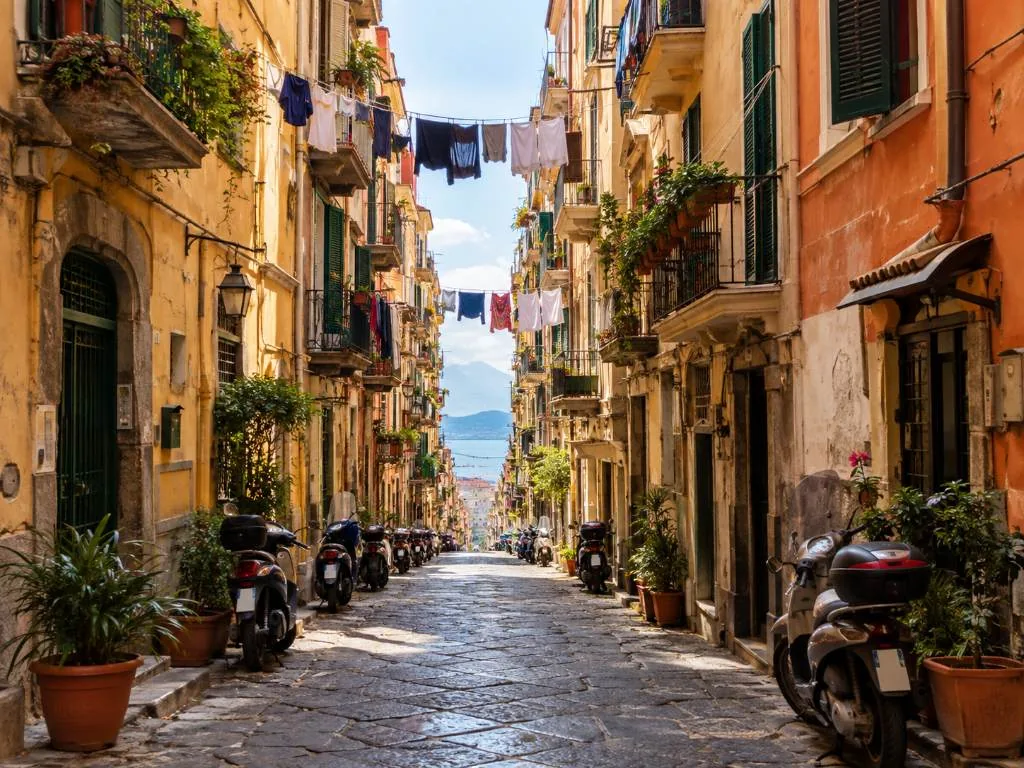
I won’t compromise on footwear: closed shoes with soles. The paving is uneven, the alleys are narrow, and scooters go where they shouldn’t. And arrive early: groups leave on time and can’t be joined once the tour has started. Oh, and tipping: in Italy, it’s not mandatory; on a tour, it’s a gesture, not an obligation, and on one of the walking tours, it’s already included.
When not to book
There are cases where I’d tell you to skip it. If you’ve already been to Naples two or three times, know what a frittatina is, and have your favourite stalls, the tour won’t teach you anything new: just take Via dei Tribunali and do your own thing. If you only have one afternoon in the city and the Archaeological Museum is on your mind, don’t squeeze two and a half hours of walking and tastings into an already packed schedule: save it for your next trip. If you have serious mobility issues, two and a half hours mostly standing on uneven paving is tough, and a private tour that adapts to your pace is better than a shared one. If you don’t eat meat, dairy, or fried food, half the stops on a street food tour won’t suit you.
Outside of these cases, my stance is simple, and it’s not enthusiastic by default: the first time in Naples, tackling the historic centre alone is a struggle. It’s dense, it’s fast, people speak in dialect, and the best stalls don’t have the biggest signs. A guide turns all this from exhausting to understandable, and two and a half hours are enough because after that, you can manage on your own for the rest of your trip. Which of the six to choose, I discuss in which is the best one, what season to come in , when to go, and what determines how much you pay in how much it costs.
Ready to book
If you’ve decided, the city’s most popular walking tour has real-time availability below. If you’re still torn between a walking tour and a workshop, I discuss it in which food tour to choose, and if your doubt is more fundamental, in is it worth it.
Frequently asked questions
How long does a food tour in Naples last?
Between two and a half and three hours, almost always on the move. The details for each tour are in how much time you need.
Is a walking tour better or a pizza-making class?
They’re two different experiences, not alternatives: the walking tour is a meal on the move through the historic centre, while the class is a three-hour indoor workshop. I compare them in all the tours and in pizza-making courses.
Will you eat enough to skip dinner?
In most cases, yes, and those who arrive at dinner with their appetite intact are the exception. I discuss it in what to expect.